Depositing checks
Lifecycle
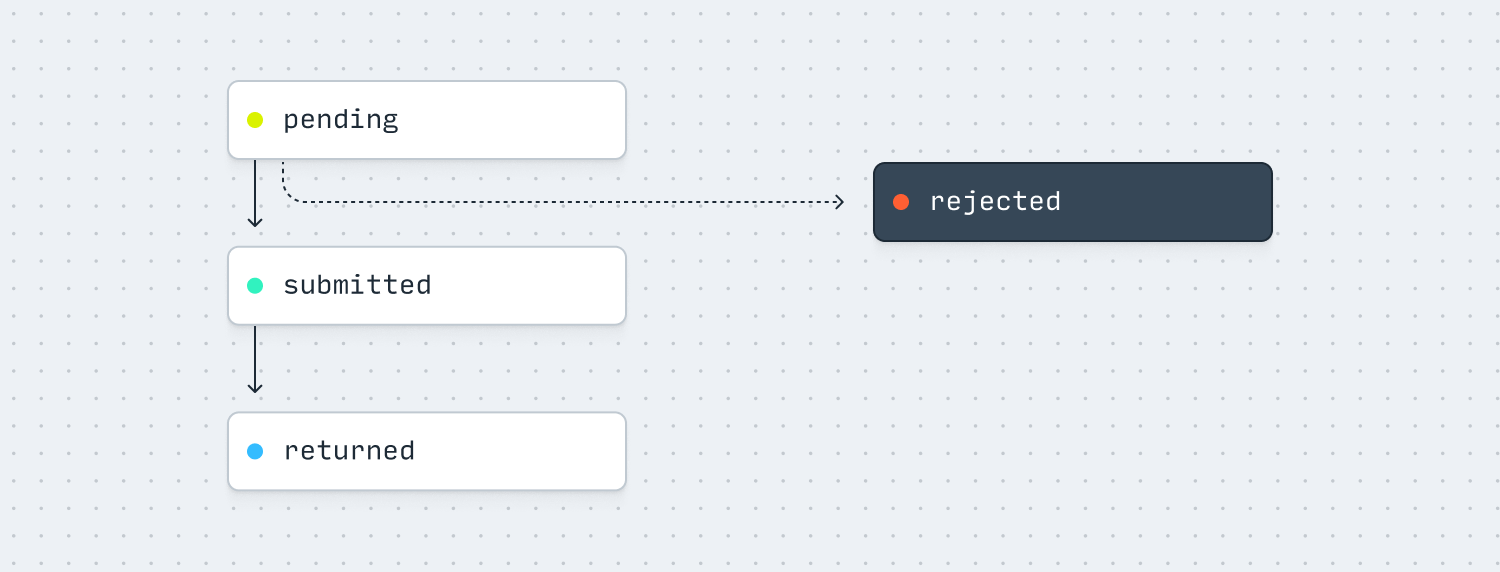
| Status | Description |
|---|---|
pending | The Check Deposit is pending review. |
submitted | The Check Deposit has been deposited. |
rejected | The Check Deposit has been rejected. |
returned | The Check Deposit has been returned. |
Depositing a Check with Increase
Depositing a Check via the Increase API kicks off several steps involving you, Increase, the Federal Reserve, and the receiving bank.
- You make a
POST /check_depositscall with the details of the deposit amount and images of the check. A Check Deposit is created with a status ofpending. - A Pending Transaction is immediately created for the full amount of the deposit.
- The check images are processed and reviewed by an Increase operator. Upon successful processing, the Check Deposit object updates with its
deposit_acceptancedetails. - When the file is submitted to the Federal Reserve, Increase updates the Check Deposit object with its
deposit_submissiondetails and the status is updated tosubmitted. - A Transaction is immediately created for the full amount of the deposit and the Pending Transaction is marked as
complete. - If a Return is received from the originating bank, the Check Deposit object is automatically updated with
deposit_returndetails and the status is updated toreturned. A new Transaction is created to decrement funds from the Account.
Reviews and rejections
All check deposit images are processed and reviewed by an Increase operator. This includes validation of the account number, routing number, amount, and serial number. If there is invalid information or an issue processing the check image, the Check Deposit object status is updated to rejected. The Pending Transaction updates to complete, no Transfer information is submitted to the network, and no additional Transactions are created.
Returns
Once a Check Deposit is submitted to the Federal Reserve and presented to the payor bank, that bank must decide to dishonor it by midnight of the next banking day. The timezone is at the discretion of the payor bank.
The exception to this short window is warranty claims. If the payor bank discovers fraud, forgery, or alteration after settlement, it can pursue a return under the transfer and presentment warranties of the UCC. These claims can surface weeks or months later, though they are relatively rare.
How returns work at Increase
If a return is received from the payor bank, Increase automatically reconciles it with the original deposit. The Check Deposit object is updated with its deposit_return details and the status changes to returned. A new Transaction is created to decrement funds from the Account. You can view return details — including the return_reason and the associated transaction_id — on the Check Deposit object via the API or in the Dashboard.
Lockboxes
If you’d like to deposit checks received via mail, see the Lockboxes guide.